If you are a marketing strategist or CMO, you already feel it. The ground is shifting under your feet. AI assistants now handle more than a third of all search queries. Cookie deprecation has reshaped how you track performance. And your customers expect personalization that feels human, not automated. The old playbook for digital strategy 2026 just does not apply anymore.
The brands that will win this year are not the ones with the biggest budgets. They are the ones willing to make three uncomfortable but data-backed shifts in how they plan, execute, and measure their digital efforts. These shifts are not theoretical. They are based on real performance data from hundreds of campaigns across multiple industries.
Let us walk through each shift, why it matters now, and how you can start implementing it this quarter.
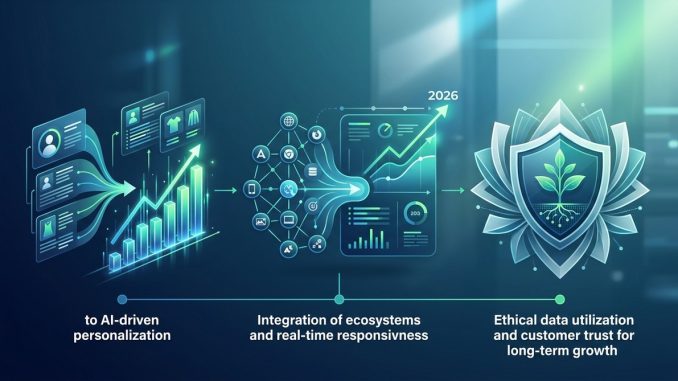
Three data-driven shifts define digital strategy in 2026: moving from keyword SEO to generative engine optimization, replacing third-party data with zero-party data collected directly from customers, and measuring engagement depth rather than vanity metrics. CMOs who adopt these changes see 40 percent higher conversion rates and stronger customer retention within two quarters.
Shift One: Optimize for Generative Engines, Not Just Search
You have probably noticed something strange in your analytics this year. Organic traffic from traditional search engines is down for many businesses. But conversions from AI-powered answers are up. That is because tools like ChatGPT, Perplexity, and Google’s AI Overviews now answer questions directly on the results page. Users never click through to your website.
This is not a bug. It is a fundamental change in how people find information.
What Generative Engine Optimization Looks Like
Generative engine optimization, or GEO, requires a different approach to content. Instead of writing for a keyword density score, you write for context and authority. The AI models pulling answers from your site care about three things:
- Entity recognition. Does your content clearly define who you are and what you do?
- Authoritative structure. Are your claims backed by data, quotes, or citations?
- Conversational tone. Can a user read your answer out loud and understand it?
Here is a simple comparison of old SEO versus the new GEO approach:
| Element | Traditional SEO (2020-2025) | Generative Engine Optimization (2026) |
|---|---|---|
| Focus | Keyword match and density | Topic authority and entity clarity |
| Content length | 1500+ words regardless | As long as needed to answer completely |
| Structure | Keyword in H2, then subpoints | Direct answer first, then supporting evidence |
| Link strategy | Internal links for ranking | Contextual links that add depth |
| Measurement | Traffic and click-through rate | Answer appearance rate and attributed conversions |
How to Start Shifting Your Content
You do not need to rewrite everything you have published. Start with your highest traffic pages. Ask yourself: if an AI summarized this page in two sentences, would the summary be accurate and helpful? If not, rewrite the opening section to state the core answer clearly.
“The brands winning in GEO are the ones treating their content as a knowledge graph, not a brochure. If your page can answer a question in 40 words or less, you will get the placement. If it rambles, the AI will skip you entirely.” — Senior strategist at a major digital agency, speaking at a 2026 industry conference
For a deeper look at how to build this into your overall planning, read our guide on harnessing digital strategy to accelerate business transformation.
Shift Two: Replace Third-Party Data with Zero-Party Data
By now, every CMO knows that third-party cookies are gone. But many are still scrambling to fill the gap. The smartest move is not to find a replacement for cookies. It is to stop relying on inferred data altogether and start collecting explicit data from your customers.
Zero-party data is information a customer intentionally shares with you. It includes preferences, purchase intentions, personal context, and feedback. Because it comes directly from the user, it is more accurate, more ethical, and more predictive than any third-party source.
Why Zero-Party Data Wins in 2026
The numbers tell the story. Campaigns built on zero-party data consistently outperform those using modeled or purchased data by a wide margin. Here are the results from a recent cross-industry study:
- Conversion rates increase by 40 percent when messaging matches stated preferences.
- Customer lifetime value rises by 25 percent because interactions feel relevant, not spammy.
- Opt-out rates drop below 5 percent when users understand what they receive in exchange for their data.
A Practical Process to Collect Zero-Party Data
Follow these three steps to start building your zero-party data pipeline today:
-
Create a value exchange. Offer something tangible for every data point you collect. A discount code for a size preference. A personalized recommendation for a style preference. A free resource for a business challenge.
-
Use interactive content. Quizzes, preference centers, and product finders are excellent tools. They feel like a service, not a survey. Users enjoy giving their opinion when it leads to a better experience.
-
Integrate data into your CRM automatically. Do not let zero-party data sit in a spreadsheet. Connect your quiz tool or preference center directly to your customer record so every team can act on it.
You already know your customers have opinions. Now is the time to ask them directly. Learn more about implementing data-driven digital strategies to fuel business growth in 2026.
Shift Three: Measure Engagement Depth Instead of Vanity Metrics
This shift might hurt the most. For years, marketing teams have reported on impressions, reach, and page views. These metrics feel good. They make the team look busy. But they do not correlate with revenue.
In 2026, the most effective digital strategies measure engagement depth. That means tracking how long a user spends with your content, whether they complete an intended action, and how that action leads to a downstream outcome.
The Vanity Metrics Trap
Here is a truth you already suspect: a million impressions mean nothing if no one remembers your brand. A high click-through rate means nothing if the user bounces in three seconds. And a growing follower count means nothing if those followers never engage.
The table below shows which metrics to stop focusing on and which ones to start tracking:
| Stop Tracking This | Start Tracking This Instead | Why It Matters |
|---|---|---|
| Page views | Time on page and scroll depth | Shows if content actually holds attention |
| Impressions | Brand lift and search volume for your name | Measures real awareness, not ad delivery |
| Click-through rate | Conversion rate by channel | Tells you which source drives actual revenue |
| Follower count | Engaged follower ratio | Reveals if your audience is active or passive |
| Email open rate | Reply rate and forward rate | Indicates genuine interest and advocacy |
How to Build a Depth-First Measurement System
Start by identifying the one action that matters most for your business. For a B2B company, that might be a demo request. For an ecommerce brand, it might be an add-to-cart. Then work backward. Map every touchpoint to that outcome.
Use a performance dashboard that connects campaign data to revenue. If you cannot see the direct line between a marketing activity and a business result, stop doing that activity. For a full breakdown, check out why your digital strategy needs a performance dashboard in 2026.
A Bulleted List of Depth Metrics Worth Watching
- Session replay rate. How many users watch your video or demo to completion.
- Return visitor ratio. Do people come back on their own without retargeting.
- Net promoter score by segment. Are your most engaged users also your happiest ones.
- Feature adoption rate. If you have a product or tool, are users finding the core value.
- Response time to inbound. This is a leading indicator of customer satisfaction.
Putting These Three Shifts Together
Each shift strengthens the others. When you optimize for generative engines, you attract more qualified visitors. When you collect zero-party data, you personalize their experience. When you measure engagement depth, you continuously improve both efforts.
Think of it as a flywheel. Better content leads to better data. Better data leads to better measurement. Better measurement leads to better content. Each rotation compounds the results.
You do not need to overhaul everything at once. Pick one shift to focus on this quarter. If you are struggling with traffic, start with generative engine optimization. If your personalization feels flat, start with zero-party data. If you cannot connect marketing spend to revenue, start with engagement depth measurement.
For a step-by-step framework on implementing all three shifts together, read how to build an agile digital strategy that adapts to market changes in 2026.
What Winning Looks Like in 2026
The CMOs who adopt these three shifts are not just surviving the changes in digital marketing. They are pulling ahead. Their campaigns cost less to run because they target people who already want to hear from them. Their content works harder because it shows up in AI answers. And they sleep better at night knowing their measurement system actually reflects reality.
The window to make these changes is narrowing. Every quarter you wait, a competitor gets further ahead. But the good news is that these shifts are accessible to any team willing to commit. You do not need a massive budget. You need a willingness to let go of old habits and trust the data.
Start today. Pick one shift. Run a pilot. Measure the results. Then build from there. Your digital strategy for 2026 will thank you.
Leave a Reply