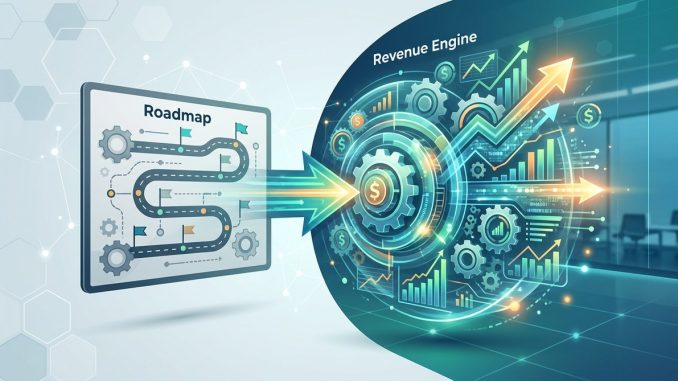
Most digital plans look beautiful on paper. They map out goals, timelines, and milestones with clean arrows and neat boxes. Yet many of those plans never move the needle on revenue. Why? Because a roadmap tells you where you want to go, but it does not generate the momentum to get there. A roadmap is passive. A revenue engine is active. It is the difference between drawing a map of a treasure island and actually sailing there with a crew, supplies, and a system that keeps you on course.
The most successful companies in 2026 treat digital strategy as a living system. They build repeatable processes that produce measurable revenue outcomes. They do not wait for a quarterly review to adjust. They test, learn, and scale in real time. That shift in mindset changes everything.
A digital strategy without a revenue engine is just a wish list. Roadmaps show direction, but they do not generate growth. The businesses winning in 2026 pair clear plans with systems that convert, measure, and optimize. You need analytics, content, and automation working together. That combination turns passive digital presence into an active profit driver.
Why a Roadmap Alone Leaves Money on the Table
A roadmap feels safe. It shows milestones, timelines, and deliverables. But a roadmap is a plan, not a machine. It tells you where you want to go, yet it does nothing to move you there.
Think of it this way. A roadmap describes the destination. A revenue engine is the vehicle that gets you there. Without the engine, even the most detailed map sits unused in the glovebox.
Most digital strategies fail not because the plan is wrong, but because the plan never connects to revenue. Teams build beautiful websites, publish content, and run campaigns. Then they wonder why the numbers do not move. The missing piece is usually a revenue engine: a repeatable system that turns digital touchpoints into measurable business outcomes.
This article explores why your digital strategy needs a revenue engine, not just a roadmap, and how to build one step by step.
A roadmap shows you where to go, but a revenue engine carries you there. Most digital strategies fail because they stop at planning and never connect to measurable income. This guide explains how to shift from passive documentation to active growth systems, using data, automation, and continuous optimization. You will learn practical steps to align every digital asset with revenue goals and build momentum that compounds over time.
What a Roadmap Gets Right, and Where It Falls Short
A roadmap is a useful document. It maps milestones, timelines, and deliverables. It gives teams direction and helps stakeholders align on priorities. But a roadmap alone will not pay the bills. It shows the path. It does not create the momentum.
Think of it this way. A roadmap tells you where you want to go. A revenue engine actually carries you there. One is a plan. The other is a system. And in 2026, the gap between planning and doing is where most digital strategies stall.
Digital transformation has shifted. It is no longer about having a website or an app. It is about building connected systems that generate measurable business outcomes. When you harness digital strategy to accelerate business transformation, you move from static planning to active value creation. That shift changes how you measure success, how your team works, and how your budget gets spent.
What a Roadmap Gets Right (and Where It Falls Short)
A roadmap is not useless. It gives direction, sets milestones, and aligns stakeholders. It helps you see where you want to go.
But a roadmap alone will not grow revenue.
Why? Because a roadmap describes the path. It does not generate the fuel to travel it. You can map every step of a customer journey, outline every content asset, and define every technical upgrade. Yet if nothing in that plan directly produces measurable business value, you are left with a document that looks good in a board meeting and gathers dust in the cloud.
A revenue engine is different. It is the living system of channels, content, data, and technology that works together to attract visitors, convert leads, and retain customers. A roadmap tells you where you want to go. A revenue engine actually takes you there.
The difference matters more than ever in 2026. Digital noise keeps rising. Attention spans keep shrinking. And the companies that win are not the ones with the most elaborate plans. They are the ones that build systems designed to generate revenue on autopilot.
A roadmap tells you where to go. A revenue engine takes you there. Too many digital strategies stall after launch because they lack measurable, repeatable growth mechanics. This guide explains why your digital strategy needs a revenue engine, not just a roadmap, and shows you how to build one that turns digital assets into predictable income. You will learn the core components, common mistakes, and practical steps to make revenue generation a built-in outcome of your digital efforts.
The Roadmap Trap
Most digital plans look impressive on paper. They list goals, timelines, and deliverables. They describe new platforms, redesigned websites, and content calendars. Yet many of these plans fail to produce meaningful revenue. Why? Because a roadmap is a map, not a machine.
A roadmap tells you where you want to go. A revenue engine is the system that actually gets you there. It turns strategy into measurable outcomes. It connects every digital asset to a business result. Without that engine, your roadmap is just a document that collects dust.
The difference matters more than ever in 2026. Digital channels are crowded. Customer attention is fragmented. Budgets face constant scrutiny. A roadmap alone gives you direction. A revenue engine gives you results. Let’s explore why this shift is essential and how to build one for your organization.
The Roadmap Trap
Most digital strategies start with ambition. You map out goals, timelines, and milestones. You identify channels, tools, and audiences. Then you publish the plan and wait.
Nothing happens.
That is the roadmap trap. A roadmap tells you where you want to go. It rarely tells you how to generate revenue along the way. It lists activities without linking them to income. It describes what you will build, but not what it will return.
A revenue engine flips this thinking. It treats every digital asset, every campaign, and every data point as part of a system designed to produce measurable financial outcomes. Instead of asking “what should we build next?”, it asks “what will generate the most revenue today and in the next quarter?”
The difference sounds small. In practice, it changes everything.
What a Roadmap Does Well (And Where It Falls Short)
Roadmaps are not useless. They help teams align on priorities, timelines, and budgets. They create clarity across departments and keep stakeholders focused on shared goals.
But a roadmap is a plan. It describes where you want to go. It rarely describes how you will pay for the journey or how each step contributes to revenue.
A revenue engine is different. It is a living system that connects every digital asset, campaign, and data point to a measurable business outcome. Instead of a static document, it behaves like a machine that converts attention into customers and customers into profit.
Think of it this way. A roadmap shows you the destination. A revenue engine builds the vehicle that takes you there. And in 2026, most businesses have plenty of maps. What they lack is the engine under the hood.
What Is a Revenue Engine in a Digital Strategy?
A revenue engine is not a tool. It is a mindset, a process, and a set of integrated systems that turn digital activity into predictable income. A roadmap tells you where to go. A revenue engine tells you how to get there, how fast, and what to do when the market shifts.
This distinction matters more than ever. Many companies spend months building detailed digital roadmaps. They map out websites, content calendars, and campaigns. Then they wonder why growth stalls. The reason is simple. A roadmap describes the journey. A revenue engine powers it.
In 2026, the gap between companies with a roadmap and companies with a revenue engine is growing. The winners are not the ones with the prettiest plans. They are the ones with systems that convert attention into revenue. If you want to see how this thinking fits into a larger transformation effort, explore our guide on harnessing digital strategy to accelerate business transformation.
What Is a Revenue Engine, Really?
A revenue engine is not a sales tool. It is a connected system. It links your marketing, web experience, data, and sales follow-up into one flow. Each part feeds the next. When someone visits your site, they move through a path designed to build trust, answer questions, and remove friction. The goal is simple: turn interest into measurable revenue, not just clicks.
A roadmap, on the other hand, is a plan. It shows where you want to go. It lists projects, timelines, and milestones. That is useful. But a plan alone does not generate income. A revenue engine does.
Think of it this way. A roadmap tells your team what to build. A revenue engine tells your business how every digital asset will pay for itself. The difference is the difference between having a map and having a vehicle that runs.
This shift matters more in 2026 than ever. Digital attention is expensive. Customer expectations are higher. If your website, content, and campaigns are not actively producing revenue, you are leaving money on the table.
A digital roadmap shows where you want to go. A revenue engine builds the machinery to get there. Instead of treating digital as a set of campaigns, treat it as a system that attracts, converts, and retains customers. When every page, piece of content, and data point feeds that system, your strategy stops being a plan and starts producing measurable returns. This guide shows you how to build that engine and why it matters in 2026.
The Roadmap Trap
Most digital strategies look impressive on paper. They list goals, timelines, and shiny initiatives. Yet many of them fail to move revenue. Why? Because a roadmap is a map, not a vehicle. It tells you where to go, but it does not generate the momentum to get there.
A revenue engine is different. It is a living system of connected parts that work together to attract, convert, and retain customers. It includes your website, your content, your data, your sales process, and your marketing channels. When these pieces work in sync, growth becomes repeatable.
The difference matters more than ever in 2026. Markets move fast. Customer expectations shift overnight. A static plan becomes outdated before it is fully approved. What you need is a system that learns, adapts, and produces measurable revenue on a consistent basis.
This guide explains why your digital strategy needs a revenue engine, not just a roadmap, and how to build one that lasts.
A roadmap tells you where you want to go. A revenue engine takes you there. It combines data, automation, and customer insight into a system that generates measurable growth. This guide explains why your digital strategy needs a revenue engine, not just a roadmap, and how to build one that compounds results over time.
Why a Roadmap Alone No Longer Cuts It
Most digital strategies start with a plan. You map the channels, set the goals, and outline the timeline. Then you wait. The plan sits in a deck. The team nods along. And the market moves faster than the document.
That is the core problem. A roadmap describes where you want to go. A revenue engine actively takes you there. The difference is action.
A roadmap is passive. It lists milestones, budgets, and deadlines. It gives you a sense of control. But it does not generate demand, capture leads, or convert visitors into customers. For that, you need a system that works continuously, adapts to data, and improves with every interaction.
This is why your digital strategy needs a revenue engine, not just a roadmap. The roadmap tells you the destination. The engine is what actually moves the vehicle.
What a Revenue Engine Actually Means
A revenue engine is not a single tool. It is a connected system of strategy, content, technology, and data that works together to generate predictable growth. Think of it as the machine that turns your digital presence into measurable business outcomes.
A roadmap, on the other hand, is a plan. It lists goals, timelines, and milestones. It helps you see where you want to go. But a roadmap alone does not generate revenue. It does not capture leads, nurture prospects, or close deals.
The difference is simple:
- A roadmap describes what you want to do.
- A revenue engine does the work.
When you build a revenue engine, every piece of your digital ecosystem has a job. Your website captures visitors. Your content moves them toward a decision. Your analytics tracks what works. Your sales team follows up on warm leads. The result is a system that converts attention into measurable business outcomes.
If you are still treating your digital strategy as a static document, you are leaving money on the table. The companies winning in 2026 treat their digital presence as a living system that generates revenue, not a plan that sits in a folder.
What Is a Revenue Engine and Why It Matters Now
A revenue engine is a connected set of tools, content, and processes that turns digital visitors into paying customers. It is not a single campaign or a redesigned website. It is an ongoing system that attracts, nurtures, and converts leads on autopilot.
A roadmap, by contrast, is a plan. It tells you where you want to go. It lists milestones, timelines, and deliverables. But a plan alone does not generate revenue. It does not capture a single email, book a single demo, or close a single sale.
That is why your digital strategy needs a revenue engine, not just a roadmap. The roadmap shows direction. The revenue engine delivers results. In 2026, companies that treat digital strategy as a living system, not a static document, pull ahead of competitors who are still planning.
What Is a Revenue Engine in a Digital Strategy?
A revenue engine is the operating system that turns your digital presence into a predictable source of income. It combines content, analytics, automation, and user experience into one connected loop.
Think of it this way. A roadmap tells you where you want to go. A revenue engine gets you there and keeps you moving.
The engine does not rely on luck. It uses data to decide what to build next, tests variations, and scales what works. Every piece of your digital ecosystem, from your website to your email flows, plays a role in generating and nurturing demand.
This is a shift in mindset. Instead of treating digital strategy as a planning document, you treat it as a living system. One that learns, adapts, and converts. That is the core idea behind the question of why your digital strategy needs a revenue engine, not just a roadmap.
What Most Roadmaps Get Wrong
Most digital strategies start with a roadmap. A timeline, a list of initiatives, a set of milestones. That sounds responsible. But a roadmap is only a map. It shows where you want to go, not how you will make money along the way.
Roadmaps often fail because they focus on outputs instead of outcomes. You might launch a new website, roll out a mobile app, or refresh your brand. Those are outputs. They do not automatically create revenue.
A revenue engine, by contrast, is a system designed to turn every digital touchpoint into measurable value. It connects marketing, sales, product, and customer success around one shared goal: sustainable growth.
This article explains why your digital strategy needs a revenue engine, not just a roadmap. You will learn the difference between the two, how to build a revenue engine, and which common mistakes to avoid.
A roadmap tells you where you want to go, but a revenue engine carries you there. Plans describe goals while systems produce income. This guide explains why your digital strategy needs a revenue engine, not just a roadmap, and shows you how to build one with practical steps, useful metrics, and real examples you can apply today.
Why a Roadmap Alone No Longer Cuts It
Most companies have a digital roadmap. They have slides, timelines, and a list of initiatives. Yet many still struggle to turn those plans into predictable revenue. Why? Because a roadmap is a picture. It shows direction. It does not generate income.
A revenue engine is different. It is a living system that combines marketing, sales, data, and technology to produce measurable growth on a repeatable basis. When you build a revenue engine, every digital asset works toward one goal: turning visitors into paying customers.
The gap between a roadmap and a revenue engine explains why some businesses grow steadily while others keep planning and never launch. A roadmap tells you where you want to go. A revenue engine actually moves the business forward.
The Difference Between a Roadmap and a Revenue Engine
A roadmap is a plan. It lists initiatives, timelines, and milestones. It helps teams align around priorities. That is valuable, but a roadmap alone does not generate income.
A revenue engine is different. It is a system of connected parts that consistently produces measurable business outcomes. Think of it as the machinery that turns digital activity into predictable growth.
Here is a simple comparison:
| Roadmap Mindset | Revenue Engine Mindset |
|---|---|
| Focuses on deliverables and deadlines | Focuses on outcomes and revenue |
| Measures activity, like clicks and pages | Measures impact, like leads and sales |
| Built once and updated yearly | Tested, measured, and optimized weekly |
| Owned by a project team | Owned by the whole business |
| Ends at launch | Starts at launch and keeps improving |
| Answers “what are we building?” | Answers “how does this make money?” |
This table shows the core shift. A roadmap tells you where you want to go. A revenue engine makes sure you actually get there, profitably.
What Is a Revenue Engine in Digital Strategy?
A revenue engine is the system that turns your digital presence into a repeatable source of income. It is not a single tool or campaign. It is a connected set of processes, data flows, and experiences that move a visitor from first click to loyal customer.
Think of it this way. A roadmap is a plan on paper. A revenue engine is a working machine. It runs continuously, measuring what works, fixing what fails, and improving what succeeds. It aligns your website, content, analytics, and sales funnel around one goal: generating predictable revenue.
Many businesses treat their digital strategy as a static document. They review it once a year, maybe twice. They set goals, list tactics, and then move on. That approach no longer works. The digital landscape in 2026 is too fast, too competitive, and too data rich for a passive plan.
A revenue engine changes the game. It turns your digital presence into an active system that learns, adapts, and converts. This article explains why your digital strategy needs a revenue engine, not just a roadmap, and how to build one.
What a Roadmap Gets Right (and Where It Fails)
A roadmap is a useful planning tool. It maps out projects, timelines, and milestones. It gives your team direction and helps align stakeholders around shared goals.
But a roadmap alone is not enough.
Roadmaps are static. They describe where you want to go, but they do not react to real time data. They do not adjust when customer behavior shifts. They do not tell you which campaign is driving revenue today, this week, or this quarter.
A revenue engine, on the other hand, is a living system. It connects every part of your digital presence to measurable outcomes. It turns traffic into leads, leads into customers, and customers into repeat buyers. It is not a document. It is a process.
Think of it this way. A roadmap tells you the destination. A revenue engine tells you how to get there, when to turn, and what to do when the market changes. That distinction matters more in 2026 than ever.
What Is a Revenue Engine and Why It Matters
A revenue engine is the set of systems, tools, and workflows that turn your digital channels into a predictable source of income. It is not a single campaign or a landing page. It is the full machine that moves a visitor from first click to loyal customer.
Your roadmap may say “build a website” or “launch a blog.” A revenue engine asks a different question. It asks what each page, email, or ad will do to generate measurable business value. This shift changes how you plan, budget, and measure success.
Many teams still treat digital strategy as a planning exercise. They map out goals, set timelines, and create content calendars. Then they wonder why traffic does not translate into revenue. The missing piece is usually a revenue engine. That is the system of connected assets, data, and workflows designed to convert attention into outcomes.
For a deeper look at how strategy connects to transformation, check out harnessing digital strategy to accelerate business transformation.
What a Roadmap Does Well
A roadmap is not useless. It gives direction, priorities, and a shared vision. Teams need alignment before they build anything. A roadmap answers questions like:
- What are we building this quarter?
- Which features matter most to our customers?
- When will we launch the next campaign?
These are all important. But a roadmap only tells you where you want to go. It does not tell you how the work will pay for itself. That is where a revenue engine comes in.
A revenue engine is a system that turns digital touchpoints into measurable income. It connects your website, content, analytics, and sales funnel so every piece of your digital presence works toward a single goal: growth.
What a Roadmap Misses
A roadmap is a plan. It lists milestones, timelines, and deliverables. It answers the question, “What are we building?” A revenue engine answers a different question: “What will that building do for our bottom line?”
Many teams spend months designing beautiful digital roadmaps. They map out new features, redesign pages, and plan campaigns. Then they wonder why traffic does not convert. The missing piece is often the revenue engine, the system that turns visits into measurable business outcomes.
Think of it this way. A roadmap shows you the route. A revenue engine makes sure the route leads to profit. Without one, your digital strategy can be busy, polished, and completely unprofitable.
What Is a Revenue Engine in a Digital Strategy?
A revenue engine is the set of systems, tools, and processes that turn digital activity into predictable income. It is not a single campaign or a landing page. It is the full loop that connects your marketing, your website, your sales follow up, and your data.
A roadmap tells you where to go. A revenue engine makes sure you get paid when you arrive.
Many teams build beautiful websites and publish content on schedule. Then they wonder why traffic does not turn into customers. The missing piece is usually the revenue engine: a repeatable system that captures attention, nurtures interest, and converts visitors into buyers.
Think of it this way. A roadmap is a plan. A revenue engine is a machine. One shows you the path. The other produces measurable outcomes.
The Difference Between a Roadmap and a Revenue Engine
A roadmap answers the question, “What should we build?” A revenue engine answers a different question: “How does this build generate revenue?”
Too many digital strategies stop at the first question. Teams map out campaigns, redesign websites, and launch social channels. Then they wonder why traffic does not turn into customers. The missing piece is usually the revenue engine, the system that turns attention into action.
A revenue engine includes:
- Clear conversion paths on every page
- Lead magnets that match buyer intent
- Automated follow up sequences
- Analytics tied to revenue, not vanity metrics
- Continuous testing and optimization loops
These pieces work together. They turn a static roadmap into a living system that earns while it runs.
What a Roadmap Does Well
A roadmap gives direction. It helps teams align around goals, timelines, and milestones. Without one, digital projects drift. Budgets get spent on disconnected tools. Priorities shift with every new trend.
Roadmaps also create accountability. When you map out a quarter, you know what to build, launch, and measure. That clarity is valuable. But a roadmap alone does not generate revenue. It shows the path. It does not put fuel in the tank.
Too many businesses treat their digital strategy as a document to file away. They plan, they approve, they build, and then they wait. That approach misses the point. A strategy should be a living system that produces measurable business outcomes, not just a set of milestones.
That is why the idea of a revenue engine matters. A revenue engine turns your digital strategy into a machine that consistently attracts, engages, and converts prospects. It is not a static plan. It is a repeatable process that connects every digital asset to a clear business result.
What Is a Revenue Engine?
A revenue engine is the operational side of your digital strategy. It is the collection of tools, content, data, and workflows that turn visitors into leads, and leads into customers. A roadmap shows you the destination. A revenue engine actually drives the vehicle.
Most companies build roadmaps. They map out goals, timelines, and deliverables. Then they hand the plan to a team and hope for the best. That approach often leads to beautiful documents that sit unused. A revenue engine changes that. It connects every digital activity to a measurable business outcome.
Think of it this way. A roadmap tells you where you want to go. A revenue engine makes sure you actually get there, with the fuel to keep moving. It is not a document. It is a system. It includes the tools, content, data, and workflows that turn visitors into customers.
If you want to go deeper on how strategy fuels transformation, read our guide on harnessing digital strategy to accelerate business transformation.
Why a Roadmap Alone Falls Short
A roadmap is useful. It gives direction. It aligns teams. But a roadmap is passive. It describes where you want to go. It does not make the journey happen.
Digital markets move fast. Competitors launch new features weekly. Customer expectations shift daily. A roadmap that you update once a quarter can feel outdated within weeks.
A revenue engine, on the other hand, is active. It is a system of connected parts that generate measurable business value. It includes your website, your content, your data, and your conversion paths. Together, they work like a machine built to produce revenue.
Many teams spend months building a roadmap. They map out campaigns, redesign pages, and plan content. Then they wait. They hope the plan will work. But a plan without an engine is just a document.
The shift is simple: stop treating digital strategy as a static map and start treating it as a living system. That system should attract visitors, nurture them, and convert them into paying customers. This article explains why your digital strategy needs a revenue engine, not just a roadmap, and how to build one.
A roadmap tells you where to go. A revenue engine takes you there. Instead of a static plan, build a system that continuously turns digital touchpoints into measurable revenue. You need clear metrics, automated follow up, and constant testing. This guide shows you how to shift from passive strategy to active growth, with practical steps and real examples.
Why Your Digital Strategy Needs a Revenue Engine, Not Just a Roadmap
Most digital plans fail because they stop at the map. A roadmap shows direction. It lists goals, timelines, and milestones. But it does not generate revenue. A revenue engine does. It is the system that turns every digital asset into a measurable source of growth. This distinction matters more than ever in 2026, as competition tightens and attention spans shrink.
Your website is not a brochure. It is a machine. When built with intent, it can attract visitors, nurture trust, and convert interest into sales. A roadmap tells you where you want to go. A revenue engine makes sure you actually get there, with revenue as the destination.
This guide explains the difference and shows you how to shift your approach. You will learn practical steps to build a digital presence that works like a revenue engine, not just a pretty plan.
A digital strategy is more than a roadmap. It is a living system that turns data, content, and user experience into measurable revenue. This guide explains why your digital strategy needs a revenue engine, not just a roadmap, and shows you how to build one. You will learn practical steps, common mistakes, and proven tactics to align your online presence with business growth in 2026.
The Roadmap Trap: Why Plans Fail Without an Engine
Most companies treat digital strategy like a map. They plot the destination, mark the milestones, and assume the journey will follow the route. Then they wonder why results stall. A roadmap shows you where to go. A revenue engine actually gets you there. The difference matters more than ever in 2026, when attention spans are short and competition is fierce.
A roadmap is passive. It sits in a document, a slide deck, or a project management tool. It describes what should happen. A revenue engine, on the other hand, is an active system. It continuously attracts, converts, and retains customers. It does not wait for approval. It runs, measures, and improves.
Think about the difference this way. A roadmap answers the question, “Where are we going?” A revenue engine answers, “What are we doing today that makes money and builds momentum?” Both matter. But only one drives growth. That is why your digital strategy needs a revenue engine, not just a roadmap.
What a Roadmap Alone Cannot Do
Roadmaps are useful. They map out initiatives, timelines, and milestones. But they also sit in slide decks. They gather dust in project management tools. They become outdated the moment the market shifts.
A roadmap describes what you plan to do. It does not generate a single dollar. It does not test a hypothesis. It does not validate a channel. It does not tell you if your message resonates with real buyers.
That is where the revenue engine comes in.
A revenue engine is a repeatable system that turns digital touchpoints into measurable outcomes. It connects your strategy to actual business results. It tracks leads, conversions, and revenue. It adjusts based on data. It is not a static document. It is a living process that powers growth.
The difference matters more than most teams realize. A roadmap tells you where you want to go. A revenue engine tells you whether you are actually getting there, and it corrects the route when you drift. If your digital strategy only exists as a document, you are planning. If it exists as a working system that generates and nurtures demand, you are growing.
A digital strategy is not a document. It is a living revenue engine that connects every touchpoint to measurable outcomes. Roadmaps describe where you want to go, but engines actually move the business. To succeed in 2026, you need systems that generate demand, convert visitors, and retain customers. This guide explains how to shift your thinking, build the right components, and avoid common traps that keep digital initiatives from producing real revenue.
The Roadmap Trap: Why Plans Fail to Produce Revenue
Most companies start with a beautiful plan. They map out goals, timelines, and budgets. They create slides with arrows and milestones. Then they wait for revenue to follow.
It rarely does.
A roadmap tells you where you want to go. It does not tell you how to make money along the way. That distinction matters more than ever in 2026. Digital channels have matured, customer behavior has shifted, and competition is fierce. A document that describes your destination is no longer enough. You need a system that generates measurable outcomes. That system is a revenue engine.
Think of it this way. A roadmap is passive. It shows direction. A revenue engine is active. It produces results. It turns digital touchpoints into repeatable, scalable growth. If your digital strategy only maps the journey, you are missing the part where the journey pays for itself.
This article explains why your digital strategy needs a revenue engine, not just a roadmap, and how to build one.
A roadmap shows you where to go, but a revenue engine actively generates growth along the way. The best digital strategies in 2026 combine clear direction with systems that create repeatable income. You need both. This guide explains how to shift from passive planning to active revenue generation using data, automation, and customer insight.
Why a Roadmap Alone Is No Longer Enough
Most companies start with a plan. They map out goals, timelines, and budgets. Then they build a website, launch campaigns, and wait. When results stay flat, the plan gets blamed. But the plan was never the problem.
A roadmap tells you where to go. It does not tell you how to make money along the way. That is the job of a revenue engine. A revenue engine is a system that turns your digital channels, content, and data into a predictable flow of customers and sales. It is not a document. It is a living machine that runs every day.
In 2026, the gap between companies with a roadmap and companies with a revenue engine is growing. The first group plans. The second group performs. This article explains why your digital strategy needs a revenue engine, not just a roadmap, and how to build one that actually moves your numbers.
A roadmap shows you where to go. A revenue engine takes you there. Most digital strategies fail because they focus on activities, not outcomes. This guide explains why your digital strategy needs a revenue engine, not just a roadmap, and how to build one. You will learn practical steps, common mistakes, and the metrics that matter for sustainable growth in 2026.
Why a Roadmap Alone Is Not Enough
Most teams start with a plan. They map out goals, timelines, and milestones. That is a roadmap. It tells you where you want to go. But it does not tell you how to make money along the way. That is the missing piece.
A roadmap shows direction. A revenue engine creates momentum. The difference is subtle but powerful. A roadmap answers the question, “What should we build?” A revenue engine answers, “How will this build pay for itself and keep paying?”
Many businesses treat digital strategy as a planning exercise. They produce glossy documents, set annual targets, and then wait. The result is often a beautiful plan with no revenue attached to it. That is why your digital strategy needs a revenue engine, not just a roadmap. The roadmap tells you where you want to go. The revenue engine makes sure you can afford the trip and that the trip pays for itself along the way.
A roadmap shows direction, but a revenue engine drives results. Digital strategies fail when they focus on deliverables instead of measurable income. By connecting every initiative to a revenue outcome, you turn strategy into a living system. This guide explains how to build that engine, measure it, and avoid the traps that stall growth. You will leave with a practical framework you can apply right away.
What a Roadmap Gets Wrong
Most companies start with a digital roadmap. They list projects, timelines, and milestones. They map out new tools, new pages, and new campaigns. Then they wait for revenue to follow.
Sometimes it does. Often it doesn’t.
A roadmap tells you where you want to go. It does not tell you how every step will pay for itself. That is the core difference between a roadmap and a revenue engine. A roadmap is a plan. A revenue engine is a system that consistently turns digital activity into measurable income.
Too many businesses treat digital strategy like a checklist. Launch the website. Post on social media. Run the ad campaign. Check the box. But without a revenue engine mindset, those actions stay disconnected from actual business growth.
If you want to see how this plays out in real transformation work, this guide to digital business transformation shows how leaders move from static planning to active execution.
What a Revenue Engine Really Means
A revenue engine is not a single tool or campaign. It is a connected system. Every piece of your digital presence works together to attract, convert, and retain customers. Think of it as a machine where each part feeds the next.
Your website captures leads. Your email nurtures them. Your sales team closes deals. Your product delivers value. Then your content brings those customers back. When all these pieces work together, revenue becomes a predictable outcome.
A roadmap, by contrast, is just a plan. It tells you where to go. A revenue engine tells you how to generate income at every step of the journey. The difference matters more than most teams realize.
If you want to see how this plays out in real business settings, check out this guide on harnessing digital strategy to accelerate business transformation. It shows how strategy and execution work together, not as separate silos.
What a Roadmap Gets Right (And Where It Falls Short)
Roadmaps are not bad. They help you map goals, timelines, and milestones. They give your team direction and keep projects aligned.
But a roadmap alone is passive. It describes where you want to go. It does not generate the outcomes that pay the bills.
A revenue engine, on the other hand, is active. It is a system designed to produce measurable business results on a continuous basis. It combines strategy, technology, and data to create repeatable growth loops. Think of it as the difference between a map and a motor. One shows you the destination. The other actually moves the vehicle.
Many companies spend months building elaborate digital roadmaps. They outline new features, plan redesigns, and map out content calendars. Then they wonder why organic traffic stays flat and revenue does not move. The roadmap is not the problem. The problem is treating the roadmap as the finish line instead of the starting point.
What a Roadmap Gives You
A roadmap provides direction. It helps you align teams, set priorities, and communicate your vision. That matters. Without a plan, digital efforts scatter in every direction.
But a roadmap is not a revenue engine. It is a map, not the vehicle. It shows you where to go, yet it does not create momentum. A roadmap describes the destination. A revenue engine builds the machine that carries you there.
Think about it this way. You can have the most detailed map of a new city, but without a car, fuel, and a driver, you are not moving. The map is useful. The engine is essential.
That is why your digital strategy needs a revenue engine, not just a roadmap. The roadmap tells you what to build. The revenue engine tells you how every piece of that work earns money, how it compounds, and how it keeps working long after launch.
What a Roadmap Alone Cannot Do
A roadmap gives direction. It lists goals, timelines, and milestones. That is valuable. But a roadmap alone will not pay the bills. It describes where you want to go, yet it never guarantees you will get there.
Many companies treat their digital strategy like a to-do list. They build a new website, launch a campaign, or refresh their brand. Then they wait. When revenue does not move, they wonder what went wrong.
The gap is simple. A roadmap shows the path. A revenue engine creates the pull that moves you along it. Without that engine, even the most detailed plan stays stuck in a slide deck.
Expert advice: A digital strategy is not a deliverable. It is a system for turning customer problems into measurable revenue. If your plan does not connect directly to revenue, it is a wish list, not a strategy.
What Is a Revenue Engine in Digital Strategy?
A revenue engine is the set of connected systems, content, and experiences that turn visitors into buyers. It is not a single tool. It is a loop that works like this:
- Attract the right audience through search, content, and campaigns.
- Capture their attention with clear value and strong messaging.
- Convert them with frictionless user journeys.
- Retain them with personalized follow-up and support.
- Measure every step and improve the weakest link.
A roadmap shows where you want to go. A revenue engine makes sure you actually get there. The difference is execution, measurement, and continuous optimization.
Many teams spend months building beautiful digital plans. Then they launch, wait, and wonder why traffic does not convert. That is because a roadmap is passive. A revenue engine is active. It pulls people in, moves them through a journey, and turns them into paying customers.
This article explains why your digital strategy needs a revenue engine, not just a roadmap, and how to build one.
What a Roadmap Does Well (And Where It Fails)
A roadmap is a useful planning tool. It maps out initiatives, timelines, and milestones. It helps align teams around shared goals. Without one, digital projects drift.
But a roadmap alone does not generate revenue. It shows you where to go. It does not make sure anyone arrives.
Here is the core problem: many companies treat the roadmap as the finish line. They plan, design, and launch. Then they move on to the next initiative. The website exists. The campaigns run. But nobody connects the dots between the digital work and the bottom line.
That is the difference between a roadmap and a revenue engine.
A revenue engine is a system. It is built to attract, convert, and retain customers. Every page, every campaign, every data point feeds into a loop that produces measurable growth. It is not a one time project. It is a living process that improves with every interaction.
If your digital strategy is just a roadmap, you have a plan. If it is a revenue engine, you have a machine that earns while you sleep. That is the shift this article is about.
What Most Digital Roadmaps Get Wrong
Most roadmaps focus on deliverables. They list websites, campaigns, and content calendars. They describe what you will build, not what those assets will do. That sounds helpful, but it misses the real point.
A roadmap tells you where to go. It does not tell you how to make money along the way.
Too many businesses treat digital strategy as a checklist. Launch a new site. Publish blog posts. Run ads. Then what? Without a revenue engine, those activities stay disconnected. They consume budget without returning measurable growth.
The shift from roadmap to revenue engine changes everything. It moves the focus from outputs to outcomes. Instead of asking, “What do we build next?” you ask, “What will generate predictable revenue next?”
This article explains why that shift matters and how to make it happen in 2026.
A roadmap tells you where you want to go, but a revenue engine builds the machinery to get there. In 2026, winning digital strategies focus on repeatable systems that generate measurable income, not static plans. You need to align your tech, content, and data around revenue goals. This guide shows how to shift from planning to performance.
Why a Roadmap Alone Leaves Revenue on the Table
A roadmap is a map. It shows the route. It lists milestones and deadlines. But a map does not move the car. A roadmap does not sell products, capture leads, or nurture prospects. It simply points in a direction.
That is the core problem. Most digital strategies stop at the planning stage. Teams create beautiful decks, set quarterly goals, and then wonder why traffic does not convert. The missing piece is a revenue engine. A revenue engine is the operating system that turns digital efforts into measurable income. It connects your website, content, data, and sales process into one continuous loop that generates and nurtures demand.
If your strategy only describes where you want to go, you are missing the how. The how is the engine. And without it, even the best roadmap leads nowhere.
A digital strategy without a revenue engine is just a wish list. A roadmap shows the destination, but a revenue engine builds the vehicle, fuels it, and keeps it moving. This guide explains why your digital strategy needs a revenue engine, not just a roadmap, and how to build one that converts strategy into measurable growth.
What a Roadmap Alone Cannot Do
A roadmap is a plan. It shows you where you want to go. It lists milestones, timelines, and deliverables. That sounds great on paper. But a roadmap does not generate revenue. It does not capture leads, nurture prospects, or close sales. It simply points in a direction.
The problem appears when teams treat the roadmap as the finish line. They build the website, launch the campaign, and wait. Then they wonder why traffic does not convert. The missing piece is the revenue engine: the system of tools, data, and processes that turns digital activity into measurable income.
A roadmap tells you what to build. A revenue engine tells you how to make money from what you build. You need both, but the second one is what keeps your business alive.
What a Roadmap Does Well
A roadmap gives direction. It aligns teams, sets timelines, and defines milestones. Without one, your digital efforts drift. You might invest in the wrong channels, chase trends that do not matter, or waste budget on tools nobody uses.
That is why most companies start with a roadmap. They map out the website launch, the content plan, the marketing campaigns. Then they wait for revenue to appear. Often, it does not.
The gap is not strategy. The gap is execution. A roadmap tells you where you want to go. A revenue engine actually moves the numbers.
Why a Roadmap Alone Falls Short
A roadmap is a plan. It shows the route, the stops, and the destination. But a plan does not generate income. It does not convert visitors into buyers, and it does not turn a website into a sales channel.
Think about it this way. You can map every page, every campaign, and every feature. But if those assets do not work together to produce revenue, you are just documenting activity. Activity feels productive, yet it often leads nowhere.
Many teams spend months building a digital roadmap. They define goals, set milestones, and design beautiful decks. Then they launch and wonder why traffic does not translate into sales. The missing piece is usually a revenue engine, not a better plan.
A revenue engine is a system that turns digital touchpoints into measurable outcomes. It includes conversion paths, data feedback loops, and continuous optimization. A roadmap only shows direction. A revenue engine delivers results.
That difference matters more than ever in 2026. Customers expect personalized experiences, and businesses that treat digital strategy as a static document fall behind. Harnessing digital strategy to accelerate business transformation starts with this mindset shift.
What Is a Revenue Engine?
A revenue engine is the operational side of your digital strategy. It is the set of tools, processes, and data flows that turn visitors into paying customers. Think of it as the machinery behind your website, content, and campaigns.
A roadmap shows direction. A revenue engine produces results.
The difference matters. A roadmap tells you where to go. A revenue engine makes sure you actually get there with measurable returns. Without it, your digital strategy stays stuck in the planning phase.
The Roadmap Trap
Many businesses fall into the roadmap trap. They build detailed plans, map out customer journeys, and define buyer personas. Then nothing happens. The plan sits in a slide deck, while competitors move faster.
The problem is not the plan. The problem is that a plan without execution tools is just a wish. You need systems that generate demand, capture leads, and convert visitors into paying customers. That is the revenue engine.
What Is a Revenue Engine?
A revenue engine is the set of systems, tools, and processes that turn your digital presence into a predictable source of income. It connects your website, content, analytics, and sales funnel into one continuous loop.
A roadmap tells you where you want to go. A revenue engine actually gets you there.
The difference is action. A roadmap is passive. It describes what could happen. A revenue engine is active. It creates the conditions for revenue to happen on its own.
Think of it this way. A roadmap shows you the scenic route. A revenue engine is the vehicle, the fuel, and the driver all in one. It does not just point toward growth. It generates growth.
Why a Roadmap Alone Falls Short
Most digital strategies look good on paper. They include buyer personas, content pillars, channel plans, and a timeline. But they often stop there. They become a deck that gets presented once and then forgotten.
A roadmap tells you where to go. It rarely tells you how to make money along the way. That is the core difference.
A roadmap is a plan. A revenue engine is a system. The system turns visitors into leads, leads into customers, and customers into repeat buyers. Without that engine, your digital strategy is just a document.
If you are still building a traditional plan, you may want to explore harnessing digital strategy to accelerate business transformation to see how the best teams shift from static plans to living systems.
What a Roadmap Gets Right and Where It Falls Short
Roadmaps are not useless. They help you map milestones, assign owners, and set deadlines. But a roadmap only shows the route. It does not generate momentum. It does not produce revenue.
A roadmap tells you what to build. A revenue engine tells you why you are building it and how it pays for itself.
Think of it this way. A roadmap is a picture. A revenue engine is a machine. One hangs on the wall. The other runs every day and produces results.
The problem appears when teams treat the plan itself as the outcome. They launch a website, publish content, and wait. When revenue does not follow, they assume the strategy failed. In most cases, the strategy was fine. The missing piece was a system designed to convert attention into measurable business value.
What Is a Revenue Engine?
A revenue engine is not a single tool or tactic. It is a connected system of channels, content, data, and automation that works together to attract visitors, nurture leads, and convert them into paying customers. Think of it as the machinery that turns digital effort into predictable income.
A roadmap, on the other hand, is a plan. It shows you where to go. But a plan does not generate revenue. It does not capture emails, book calls, or close sales. That is the job of a revenue engine.
The shift matters because digital markets in 2026 are crowded. Attention is expensive. Customers expect personalized experiences at every touchpoint. If your strategy only describes what you want to build, you will fall behind teams that are busy building systems designed to sell.
This is why your digital strategy needs a revenue engine, not just a roadmap. A roadmap tells you the direction. A revenue engine makes sure every step pays for itself and keeps the momentum going.
A roadmap shows you where to go. A revenue engine makes sure you actually get there with profit to show for it. This guide explains why your digital strategy needs a revenue engine, not just a roadmap, and how to build one that turns digital efforts into measurable growth. You will learn practical steps, common pitfalls, and the metrics that matter most in 2026.
The Gap Between Planning and Profit
Most digital strategies look great on paper. They list goals, timelines, and milestones. They describe the destination in glowing detail. But too many of them stop there. They become beautiful roadmaps that nobody follows with intent. The missing piece is a revenue engine, a system that actively converts digital activity into predictable income.
A roadmap tells you where you want to go. A revenue engine makes sure you actually get there with profit to show for it. That difference matters more than ever in 2026, when attention spans are short, competition is fierce, and every dollar spent on digital needs to justify itself.
If your digital strategy reads like a wish list of channels, tools, and content topics, it is probably missing the engine. This article explains why that matters and how to shift your approach.
What a Roadmap Does Well and Where It Falls Short
A roadmap is a planning tool. It maps out goals, timelines, and milestones. It helps teams align around a shared vision. That is valuable.
But a roadmap alone does not generate revenue. It shows direction, not momentum. It describes where you want to go, but it does not tell you how to build the machine that gets you there.
Think of a roadmap as the map on your phone. It shows the route. It does not put fuel in the tank or move the car. Your digital strategy needs both: the direction and the engine that powers every mile.
The difference matters because digital markets move fast. Competitors launch new features, algorithms shift, and customer behavior changes overnight. A static roadmap can feel outdated before the quarter ends. A revenue engine keeps adapting, testing, and learning.
What Is a Revenue Engine and Why It Matters
A revenue engine is a repeatable system that turns digital touchpoints into measurable income. It combines data, automation, content, and user experience into one connected loop. Each part feeds the next.
Think of it this way. A roadmap tells you where you want to go. A revenue engine carries you there. It is not a document. It is a living system that generates demand, captures leads, nurtures relationships, and closes sales.
Most businesses focus on planning. They build detailed roadmaps with milestones and deadlines. That is useful, but it is not enough. A roadmap without a revenue engine is like owning a map of a city you never visit. You know the streets, but you never drive them.
The revenue engine is the vehicle. It is the set of tools, processes, and content that turns strategy into measurable business outcomes. For a deeper look at how strategy connects to growth, explore how digital strategy accelerates business transformation.
What Separates a Roadmap from a Revenue Engine
A roadmap shows direction. A revenue engine produces results. That is the core difference.
A roadmap answers questions like:
- Where are we going?
- What do we build next?
- What milestones do we need?
A revenue engine answers a different set of questions:
- How do we turn visitors into buyers?
- Which channel delivers the strongest return?
- How do we keep customers coming back?
Many teams spend months polishing roadmaps. They map out features, timelines, and budgets. Then they launch and wonder why traffic does not convert. The missing piece is a system designed to generate revenue, not just a plan designed to generate deliverables.
This distinction matters more in 2026 than ever. Digital competition is fierce. Attention spans are short. Customers expect personalized experiences at every touchpoint. A roadmap tells you where to go. A revenue engine builds the vehicle, fuels it, and drives it.
What a Roadmap Does Well
A roadmap is not useless. It gives direction. It aligns teams. It sets expectations for stakeholders. When you map out your digital initiatives for the next two quarters, you can spot gaps, assign owners, and track milestones. That is valuable.
But a roadmap alone does not generate revenue. It describes what you plan to build. It does not describe how those plans will pay for themselves. Too many companies treat the roadmap as the finish line. They design beautiful slides, gather approval, and then wonder why traffic stays flat and conversions stall.
The missing piece is the revenue engine. That is the system of connected decisions, content, analytics, and user experience design that turns digital visitors into paying customers. A roadmap tells you where you want to go. A revenue engine makes sure you actually get there with measurable results.
What Is a Revenue Engine and Why It Matters
A revenue engine is not a single tool. It is a framework. It connects every part of your digital presence to a clear commercial outcome.
Think of it this way. A roadmap is a plan. It lists projects, timelines, and milestones. A revenue engine is the operating system that makes those plans generate income. It aligns your website, content, data, and sales process around one goal: turning attention into action.
Most companies build roadmaps filled with redesigns, feature launches, and content calendars. They track outputs. Did we ship the page? Did we publish the post? Did we launch the campaign? Those are activity metrics, not business metrics.
A revenue engine flips the focus. It asks a different set of questions:
- What is the customer trying to solve at this exact moment?
- Which pages and assets are actually producing inquiries?
- Where are visitors dropping out before they take a step?
- What would make the next best action feel natural, not forced?
- How do we keep improving after launch, not just move to the next project?
When you treat digital as a revenue engine, every decision ties back to measurable business outcomes. A roadmap shows direction. An engine delivers momentum.
Why a Roadmap Alone Falls Short
Most digital strategies start with a roadmap. You map out goals, milestones, timelines, and deliverables. That sounds responsible. But a roadmap is a plan, not a machine. It tells you where you want to go. It does not generate the force that carries you there.
A revenue engine is different. It is a system of connected parts. Each part produces measurable value. The website attracts visitors. Content educates them. Data refines the message. Design builds trust. Conversion paths turn interest into revenue. When these pieces work together, growth becomes repeatable.
Think of a roadmap as the destination on a map. A revenue engine is the vehicle, the fuel, and the driver. You need both. But too many teams spend months perfecting the map while the engine stays cold.
This is why your digital strategy needs a revenue engine, not just a roadmap. Plans are useful. Execution is what pays the bills.
A roadmap shows direction, but a revenue engine creates results. The difference is intent. Roadmaps describe what you want to build. Revenue engines are built to convert, measure, and improve continuously. This guide explains why your digital strategy needs to shift from planning to performance, how to build a system that drives measurable growth, and which common mistakes to avoid in 2026.
What Is a Revenue Engine and Why It Matters
A roadmap tells you where you are going. A revenue engine takes you there. That distinction matters more every year.
Most digital strategies fail because they focus on outputs, not outcomes. They list projects, timelines, and deliverables. They track website launches, content calendars, and feature rollouts. But they rarely connect those activities to actual revenue. That is the core problem.
A revenue engine is a system designed to turn digital touchpoints into measurable business results. It connects your website, content, data, and sales process into one loop that generates and nurtures demand. Instead of treating digital as a set of disconnected tasks, you treat it as a machine. Every part has a job. Every part feeds the next.
This article explains why your digital strategy needs a revenue engine, not just a roadmap. You will learn the difference between planning and execution, how to build a system that produces predictable income, and where most teams lose momentum. You will also see practical ways to align your marketing, web development, and analytics
Leave a Reply